


Our team rose to meet new challenges in 2024! As we look back on this year and some of the work we accomplished, we want to express how grateful we are for all of the support we receive from our community, visitors, and donors! We couldn’t do this without you.
How many animals came to Rescate Wildlife Rescue Center in 2024?
In 2024, 3,388 animals total came to our sanctuary in La Garita, Alajuela! Almost half of these animals were released back into the wild.
Those who survived and could not be released became permanent residents or were moved to another facility.
What kinds of animals came to Rescate?
Most of the animals brought to Rescate are birds, and 2024 was no different:
- 59% birds
- 24% mammals
- 17% reptiles
We also received 13 amphibians and 3 fish!
Why did they come here?
- 25% of animals were confiscated. This could mean they were being illegally transported or kept.
- 21% were extracted from the wild by well-meaning people. This is when a person thinks they need to help a wild animal that may not actually need help. It’s common for these animals to be re-released after a check-up!
- 14% were injured and needed medical care.
- 13% were being kept as pets. Our little farm area is filled with small animals who used to be kept as pets!
- 10% came here because another facility closed, and they needed to be re-homed
- 6% were orphaned animals who could not survive on their own
Where did they come from?
Animals from all over Costa Rica make it to Rescate! Since we are in Alajuela, it makes sense that 36% of the animals that enter our sanctuary are from this province. 26% came from San José, and 11% came from Heredia and Cartago, respectively.
Sometimes, an animal’s name gives visitors a clue! Guapo is from Guapiles, and Poa is from Poas.
New Waves of Change Project
In 2024, we launched a new Waves of Change Project. Participants traveled to San Josecito Beach next to Piedra Blancas National Park to help release animals with specialized needs.
Activities include: Identifying and harvesting wild edibles; setting and monitoring field cameras; and using those cameras to track released animals.
What was a typical day like for one participant? “It started around 6 a.m. with a bit of work before breakfast,” Sam, who participated for six weeks in April, said. “Typically, it was something simple like cleaning up the pathways on the site or pruning trees and plants so they could grow better.
“After breakfast, it was a lot of work—from going off in the jungle to collect food for the animals, or enrichment items like small trees and vines.”
For those who want to help animals and experience a bit of the rainforest and the beach, learn more about the Waves of Change!

An Influx of Animals
In May 2024, all Costa Rican state zoos closed for good. This included the Simón Bolívar Zoo in San José. As a result, 374 animals belonging to 56 different species needed a new home and a check-up.
Rescate Wildlife Rescue Center housed many of these animals and gave them medical care. Some animals that could not be released found a new permanent home at the center in La Garita.
Of course, all of these animals had to be examined and, in many cases, received medical treatment. Our veterinary staff worked tirelessly to address the needs of every animal that was relocated from state zoos, all while taking care of the resident animals who already call Rescate home.

Toucan Grecia Lives In Literature
Toucan Grecia became a national hero and an inspiration for animal lovers around the world when she received a prosthetic beak. In 2015, Grecia was the victim of senseless animal cruelty which caused the top portion of her beak to break.
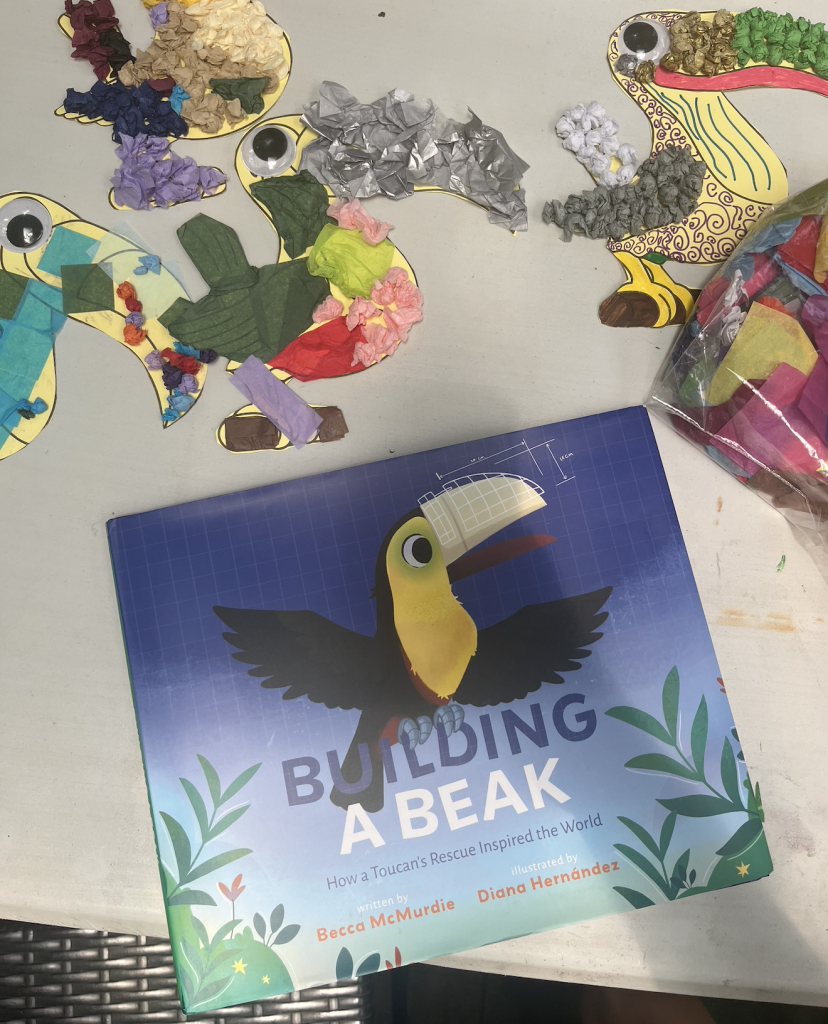
Experts created a 3D-printed prosthetic—the first of its kind! so Grecia could eat just like every other toucan. She was the subject of many news articles and documentaries…and now, young children can also learn about Grecia through a new book: Building a Beak, by Becca McMurdie.
Costa Rican artist Diana Hernández created the artwork for this children’s book.
“I loved working on the story of Grecia,” Hernandéz said. “It helps us see that no matter where we come from, our voice counts and we can help in many ways…Our knowledge, creativity and ingenuity can go beyond what we are used to doing.”
The book is for sale on Amazon and is also available in the center’s gift shop.
Looking to help injured animals in our center? Get involved by donating or purchasing items from our Amazon wishlist!
Opening The Reptile House
In 2024, we completed and opened our new Reptile House. The house includes snakes, turtles, and lizards, as well as educational materials like animal bones and replicas of indigenous artifacts. You can even see a model of Grecia’s prosthetic beak!
Rescate Wildlife Rescue Center is the home of over 100 species of reptiles, including Coco, our resident crocodile, who lives just outside the Reptile House.
In October 2023, Dr. Monika Hasenknopf and Luca Lautenschlager traveled all the way from Germany to share their expertise in reptile care. We’d like to thank them for their help in creating an environment where our resident reptiles can thrive!

Coming Soon: A Butterfly Garden
What’s next? We have been working to create a new butterfly garden filled with local species from Costa Rica. This is one of the exciting projects we will open in 2025! Some species we hope to see in our garden include: the Blue Morpho, Owl, Monarch, and Giant Swallowtail.

Cheers to 2025! 🥂
We cannot protect, release, or treat wild animals without the support of our community—This could be through volunteering, visiting, donating, or even by simply educating your friend about the dangers of having a wild animal as a pet.
Together, we are all doing our part to help protect these beautiful animals and our planet’s biodiversity for years to come.
*written by volunteer Lisa Martens


